You’ve rolled out the mat. You’ve followed the YouTube routines. Yet the scale won’t budge—and your “pilates flexibility plan” feels more like a gentle stretch session than a fat-loss engine. Here’s the hard truth: most people approach Pilates for weight loss all wrong. They confuse lengthening with slimming. But flexibility alone doesn’t melt calories. What if the real secret isn’t how deep you stretch—but how strategically you load, breathe, and sequence movement? Let’s rebuild your plan from the ground up.
Why Generic Pilates Routines Fail at Weight Loss
Traditional mat Pilates prioritizes control, alignment, and core engagement—noble goals, yes—but not designed for calorie incineration. A 50-minute beginner session burns roughly 175–250 calories. Compare that to HIIT (400–600) or even brisk walking (300+). And yet… some clients lose inches faster than those grinding on treadmills. Why?
Because they’re not doing generic routines. They’re using Pilates as a metabolic primer—activating dormant musculature, improving insulin sensitivity through controlled eccentric loading, and repairing movement inefficiencies that sabotage other workouts. Most miss this nuance. They treat Pilates like yoga’s quieter cousin instead of the neuromuscular rewiring tool it truly is.
Your Step-by-Step Pilates Flexibility Plan for Real Fat Loss
This isn’t about touching your toes. It’s about teaching your body to move efficiently under tension—so every rep counts toward leanness.
Phase 1: Activate Before You Stretch (Days 1–7)
Skip static stretching cold. Start with dynamic prep: cat-cow pulses, pelvic tilts, and single-leg bridges—each held for 3 seconds. Goal: wake up glutes and deep core stabilizers. Do this barefoot on a firm surface. Soft mats encourage passivity. You want resistance—not comfort.
Phase 2: Load + Lengthen (Days 8–21)
Add resistance bands or light ankle weights during classic moves like leg circles or side-lying clamshells. The key? Slow eccentrics—3 seconds down, 1 second up. This creates micro-tears in slow-twitch fibers, driving post-exercise oxygen consumption (EPOC). Translation: you keep burning after class ends.
Phase 3: Integrate Flow Sequences (Week 4+)
String together 4–6 movements into continuous flows—no pauses. Example: roll-up → single-leg stretch → spine twist → side kick series. Keep rest under 20 seconds. Heart rate climbs. Calorie burn jumps. Flexibility becomes functional, not just aesthetic.

| Approach | Calorie Burn (Avg/Session) | Fat-Loss Efficacy | Flexibility Gains |
|---|---|---|---|
| Traditional Mat Pilates (Beginner) | 175–250 | Low | Moderate |
| Pilates + Resistance Bands | 280–360 | Medium-High | High |
| Flow-Based Pilates (Continuous) | 320–410 | High | Moderate-High |
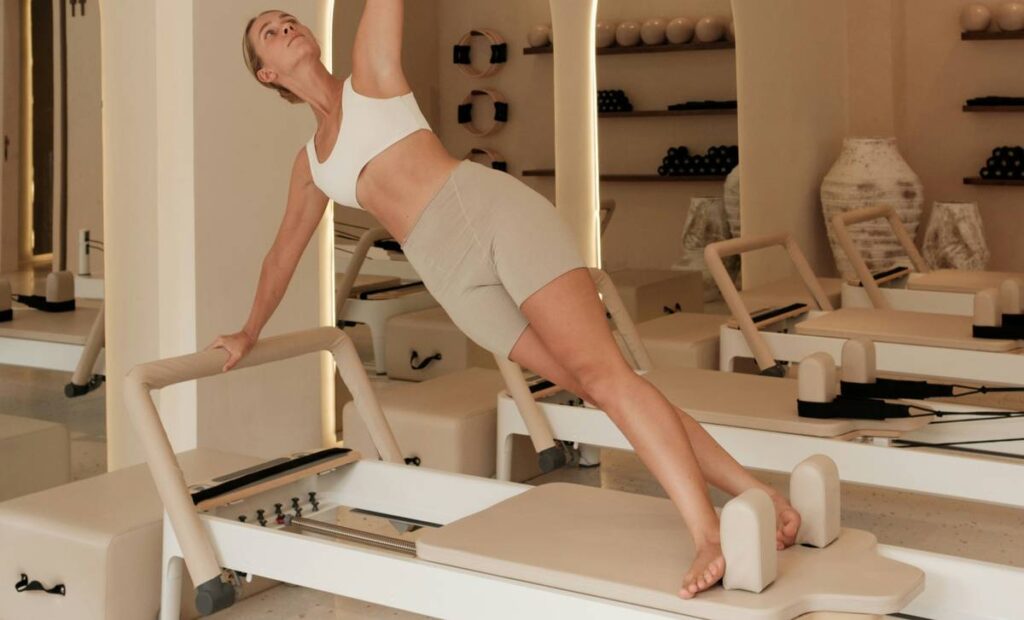
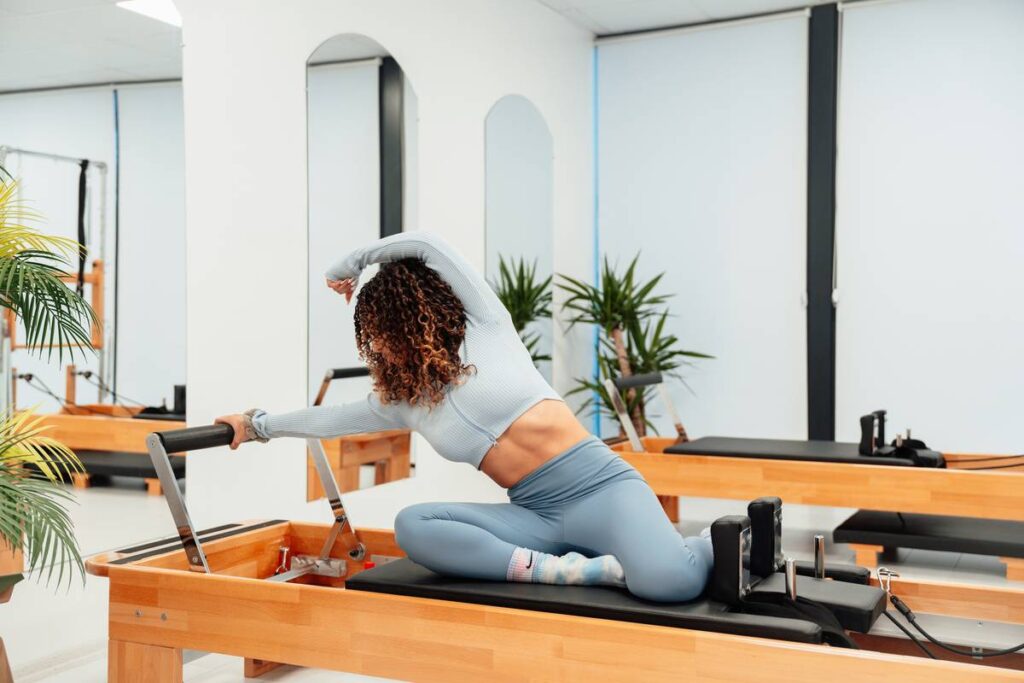
| Reformer Pilates (Studio) | 250–350 | Medium | Very High |

The Industry Secret: Flexibility Is Just the Byproduct—Tension Is the Driver
Here’s what studios won’t tell you: extreme flexibility without strength around the joint = injury risk + metabolic slowdown. Long, loose muscles require less energy to maintain. That’s counterproductive for fat loss. The real win comes from tension-rich mobility—moving through full range but under controlled load. Think of it like stretching a spring while someone gently pulls back. That dual demand—length + resistance—spikes muscle protein synthesis and forces your body to tap into fat stores for recovery fuel. One of my clients lost 9 pounds in 6 weeks not by doing more reps, but by adding 2-second isometric holds at the end-range of each movement. No cardio. Just smarter tension.
Frequently Asked Questions
Can a pilates flexibility plan help me lose belly fat?
Not directly—spot reduction is a myth. But consistent, loaded Pilates improves core activation and posture, which reduces bloating and reveals abdominal definition as overall body fat drops.
How often should I do this plan to see weight loss?
Four 30-minute sessions weekly, paired with adequate protein and sleep, typically yields measurable changes in 4–6 weeks. Consistency beats intensity here.
Do I need special equipment for an effective pilates flexibility plan?
No. A mat and a looped resistance band ($8 online) are enough. Avoid overbuying gear—your focus should be on precision, not props.